
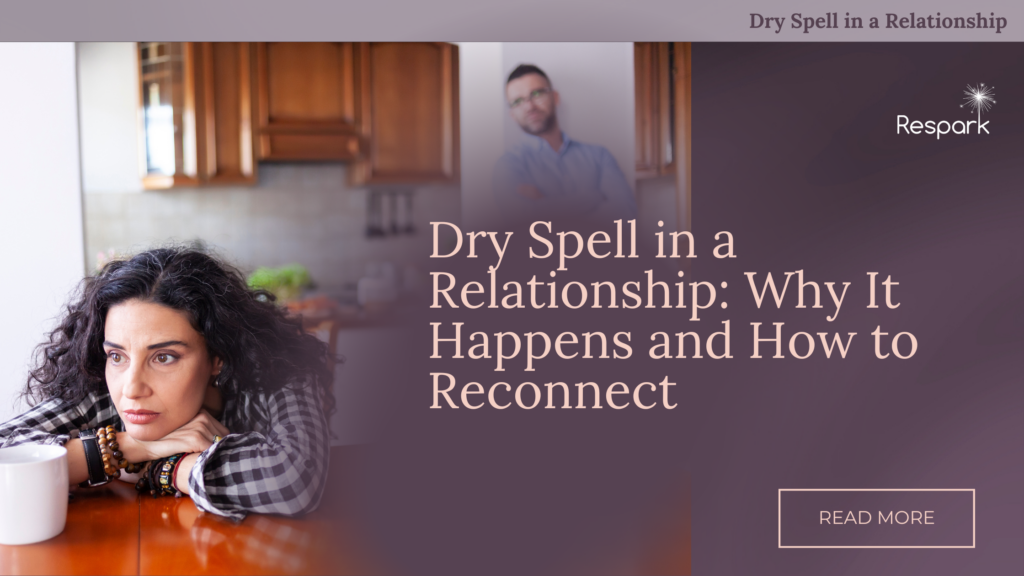
Dry Spell in a Relationship: Why It Happens and What Helps
A dry spell in a relationship is incredibly common and does not automatically mean your relationship is failing. Many couples experience periods of reduced intimacy due to stress, life transitions, emotional disconnection, or changing desire patterns, and with the right support and communication, connection can often be rebuilt.
Introduction
A dry spell in a relationship can feel confusing, lonely, and sometimes even alarming. You may start wondering whether something is wrong with the relationship, whether attraction has faded, or if things will ever feel natural again.
The truth is that most long-term relationships experience changes in intimacy over time. Desire is not static, and connection is deeply affected by stress, emotional dynamics, health, communication, and daily life. Many people find themselves quietly struggling with this issue while assuming everyone else has somehow figured it out. In this blog, we’ll explore why dry spells happen, how they impact relationships, and what actually helps couples reconnect without shame or pressure.
What Causes a Dry Spell in a Relationship?
A dry spell in a relationship is usually not caused by one single issue. More often, it’s the result of multiple emotional, physical, and situational factors building over time.
For many couples, intimacy fades gradually rather than suddenly.
Common Causes of Relationship Dry Spells
- Chronic stress or burnout
- Parenting demands and exhaustion
- Emotional disconnection
- Anxiety or depression
- Medical or hormonal changes
- Unresolved conflict or resentment
Desire Changes Over Time
Many people expect desire to stay consistent throughout a relationship, but that’s rarely how long-term intimacy works.
Desire naturally shifts across different seasons of life, especially during periods of stress, transition, or emotional strain.
Clinical Insight:
“Many couples assume a dry spell means the relationship is broken. More often, it’s a signal that the relationship needs attention, communication, and reconnection.” — Heather McPherson, LMFT-S, LPC-S, CST-S
Is a Dry Spell Normal in Long-Term Relationships?
Yes. A dry spell in a relationship is extremely common, especially in long-term partnerships.
What matters most is not whether intimacy changes, but how couples respond to those changes.
Why Dry Spells Feel So Personal
Many people interpret reduced intimacy as:
- Rejection
- Loss of attraction
- Emotional disconnection
- Fear that the relationship is failing
These fears can increase pressure and make intimacy feel even harder to approach.
You’re Not Alone in This
It’s common to feel embarrassed talking about intimacy struggles. Many couples delay addressing the issue because they hope it will resolve on its own.
The good news is that these patterns are often workable with support, honesty, and reduced pressure.
How Do You Reconnect After a Dry Spell?
Rebuilding intimacy after a dry spell starts with emotional connection, not performance pressure.
Trying to “force” intimacy often creates more anxiety and distance.
What Actually Helps Couples Reconnect
- Honest, low-pressure conversations
- Spending intentional time together
- Reducing stress and emotional overload
- Rebuilding affection outside of sex
- Letting go of unrealistic expectations
Focus on Connection First
Many couples find that intimacy improves when they stop treating sex like a task to complete and start focusing on emotional safety and closeness again.
It’s common for couples to focus only on frequency. But intimacy is usually rebuilt through emotional connection, trust, and feeling understood.
When Does a Dry Spell Become a Bigger Problem?
A dry spell becomes more concerning when it creates ongoing distress, resentment, or emotional distance that feels difficult to repair alone.
The issue is not necessarily how often sex happens, but how the relationship feels overall.
Signs It May Be Time for Support
- Avoiding conversations about intimacy
- Increased tension or resentment
- Feeling disconnected for an extended period
- Anxiety or shame around physical closeness
Earlier Conversations Help
Many people wait until frustration has deeply built up before addressing intimacy concerns.
Starting the conversation earlier often leads to healthier and more sustainable change.
Can Sex Therapy Help with a Dry Spell in a Relationship?
Yes. Sex therapy can help couples understand the deeper patterns contributing to a dry spell and create healthier ways of reconnecting.
At ReSpark Group, therapy focuses on reducing shame and improving communication rather than assigning blame.
What Sex Therapy Can Help With
- Desire differences
- Communication around intimacy
- Stress and emotional disconnection
- Anxiety related to sex or performance
- Rebuilding trust and closeness
A Shame-Free Approach
Many people find relief simply having a space where they can talk openly without fear of judgment.
Therapy is not about forcing intimacy. It’s about understanding what’s happening and creating realistic pathways back to connection.
Why Pressure Often Makes Dry Spells Worse
Pressure is one of the biggest barriers to rebuilding intimacy.
When sex starts to feel like an obligation, many people naturally pull away emotionally and physically.
Common Forms of Pressure
- Keeping score around intimacy
- Treating sex as proof the relationship is okay
- Feeling responsible for fixing everything quickly
- Comparing your relationship to others
What Helps Instead
- Curiosity instead of blame
- Patience instead of urgency
- Open communication without criticism
Many people find that intimacy returns more naturally when pressure decreases.
FAQ: Dry Spell in a Relationship
How long is a normal dry spell in a relationship?
There’s no universal timeline. Some dry spells last weeks, while others may last months depending on stress, life changes, and emotional dynamics. What matters most is how the relationship feels overall and whether both partners feel connected and supported.
Does a dry spell mean we’re no longer attracted to each other?
Not necessarily. Attraction and desire are influenced by many factors beyond physical attraction, including stress, emotional connection, mental health, and exhaustion. A dry spell does not automatically mean love or attraction is gone.
Should we force ourselves to have sex to break the dry spell?
Usually, pressure makes things worse. Rebuilding intimacy works best when couples focus on emotional connection, communication, and reducing stress rather than trying to force sexual frequency.
Can therapy help if we haven’t had sex in a long time?
Yes. ReSpark Group works with many couples experiencing long-term intimacy challenges. Therapy can help identify underlying patterns, improve communication, and create a more supportive path toward reconnection.
About the Founder
Heather McPherson, LMFT-S, LPC-S, CST-S, is the founder of ReSpark Group and an AASECT Certified Sex Therapist Supervisor with over 15 years of experience. She specializes in couples therapy, sexual health, and relationship dynamics, and has trained clinicians across Texas, Colorado, and Washington.
Are you ready for support?
Contact us today to schedule your free consultation and take the first step toward the sexual and relational well-being you deserve.
Your next steps: