

Intimacy Devices: Materials and Best Uses
Intimacy devices (commonly known as sex toys) have been made since the dawn of humankind. Ancient stone dildos have been unearthed, showing that humans have always been extremely resourceful when in the mood! Throughout the years, the designs and materials have changed and evolved, making the ever-growing sea of products even more complicated to traverse. What materials are the best? Which are hypoallergenic? Which is the hardest/softest? Can you use silicone lube with silicone toys? We’ll cover all these questions in more in the summary below of the most common intimacy device materials and best uses!
When evaluating intimacy device materials, the key factors to evaluate all tie back to safety, health, and pleasurability. For your sexual health, cleanliness, and safety, avoid toys that are porous (which harbors bacteria) and any with Phthalates* (or other toxic materials) and look for toys that are easily cleaned and hypoallergenic. For better pleasure and your personal preference, choose from toys based on their malleability, how well they carry vibration or retain heat, and their smell and/or taste. And lastly, we’ll evaluate costs, which should be more for awareness than the main deciding factor. As a general rule, the cheapest toys are not the best toys, but the most expensive might not be right for you!
Silicone
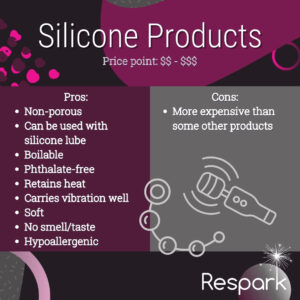
With its durability, flexibility, and pleasant feel, silicone has quickly become the go-to product for quality sex toys. Considered the ideal body-safe toys, silicone toys are easy to clean and use. Avoid “budget” toys that
are often made of lower quality silicone and are not as durable. If the toy comes with a warranty and is rechargeable, it’s a pretty safe bet that it will make you happy for years to come!
It’s a common myth that silicone toys cannot be used with silicone lube. Silicone lube is safe to use on silicone toys as long as they are cleaned thoroughly after use! Residual lubricant can break down the toy’s exterior over time, which is why toy manufacturers advise against it. As long as you are washing your toys with soap and water (or in the handy-dandy dishwasher!), you will be able to enjoy them far past their warranties.
Pros:
- Non-porous
- Can be used with silicone lube
- Boilable
- Phthalate-free
- Retains heat
- Carries vibration well
- Soft
- No smell/taste
- Hypoallergenic
- Cons:
- More expensive than some other products
Price point:
$$ – $$$
Jelly
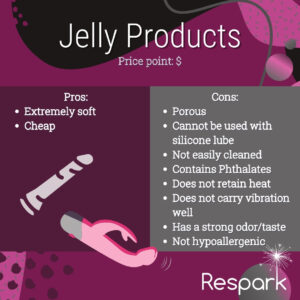
If you’ve ever received “freebie” toys from a distributor or bought budget-friendly products, you are well acquainted with jelly toys. These toys are popular for their low price point and squish-ability. However, all that flexibility comes at the cost of being a highly porous material. Because of this, jelly toys are notorious for causing infections and spreading illnesses. Jelly toys are also typically considered disposable and are not durable.
Pros:
- Extremely soft
- Cheap
Cons:
- Porous
- Cannot be used with silicone lube
- Not easily cleaned
- Contains Phthalates
- Does not retain heat
- Does not carry vibration well
- Has a strong odor/taste
- Not hypoallergenic
Price point:
$
Flesh-like
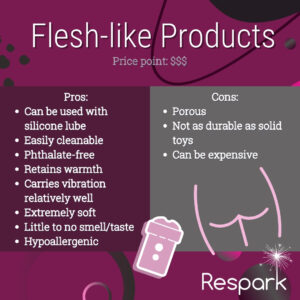
With the nature of sex toys being to imitate sexual intercourse or stimulation, it makes sense that flesh-like Thermal Plastic Materials (TPE) and silicone blends have been developed in the past few years. These toys are popular for their realistic feel and appearance. Multiple manufacturers have made their own life-like skins, but the most common products are CyberSkin, UR3, and VixSkin. While these products are possibly the closest thing you’ll get to the “real thing,” they are more porous than full silicone products and require more upkeep and care.
Pros:
- Can be used with silicone lube
- Easily cleanable (some are boilable, some require toy cleaner)
- Phthalate-free
- Retains warmth
- Carries vibration relatively well
- Extremely soft
- Little to no smell/taste
- Hypoallergenic
Cons:
- Porous
- Not as durable as solid toys
- Can be expensive
Price point:
$$$
Glass Intimacy Devices
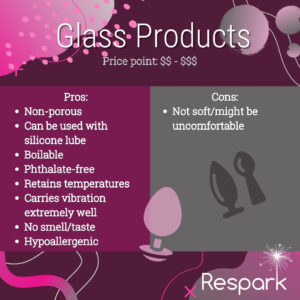
Glass toys are favored for their weight, stability, and ease of use. They require little lube to use due to their pristine, smooth exterior and are ideal for temperature play. Almost all are made with shatterproof glass and can be boiled for cleanliness.
Pros:
- Non-porous
- Can be used with silicone lube
- Boilable
- Phthalate-free
- Retains temperatures
- Carries vibration extremely well
- No smell/taste
- Hypoallergenic
Cons:
- Not soft/might be uncomfortable
Price point:
$$ – $$$
Latex
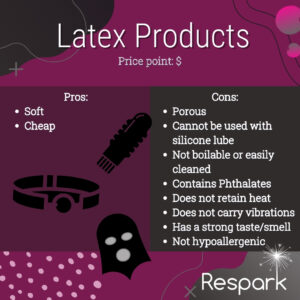
Latex toys are widely considered toxic due to the number of individuals with latex allergies. Additionally, they can harbor bacteria, cannot be used with silicone lube, and have a strong smell and taste. Just like jelly toys, it’s best to avoid these products and choose stronger candidates.
Pros:
- Soft
- Cheap
Cons:
- Porous
- Cannot be used with silicone lube
- Not boilable or easily cleaned
- Contains Phthalates
- Does not retain heat
- Does not carry vibrations
- Has a strong taste/smell
- Not hypoallergenic
Price point:
$
Metal Intimacy Devices
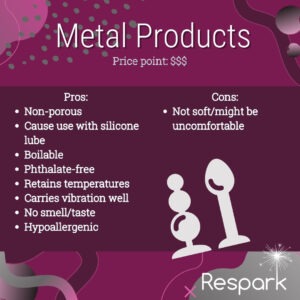
The most common types of metal toys are made from aluminum or steel. With their aesthetically pleasing, smooth finishes, metal toys are easy to clean and are boilable. With a satisfying weight to them and the ability to be boiled or frozen for temperature play, they are ideal toys for someone wanting a hard playmate.
Pros:
- Non-porous
- Cause use with silicone lube
- Boilable
- Phthalate-free
- Retains temperatures
- Carries vibration well
- No smell/taste
- Hypoallergenic
Cons:
- Not soft/might be uncomfortable
Price point:
$$$
Hard Plastics
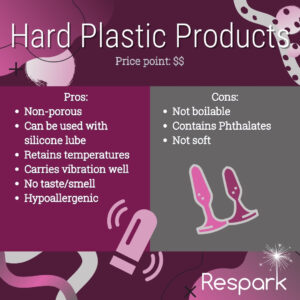
The category of “hard plastics” covers a range of products and materials. These include PVC, Lucite, Acrylic, and other toys made from solid plastics. While there are slight variations, these toys are popular for their texture, but notorious for containing toxic materials. Although they are non-porous and can be used with silicone lube, most contain Phthalates.
Pros:
- Non-porous
- Can be used with silicone lube
- Retains temperatures
- Carries vibration well
- No taste/smell
- Hypoallergenic
Cons:
- Not boilable
- Contains Phthalates
- Not soft
Price Point:
$$
Leather (and faux leather)
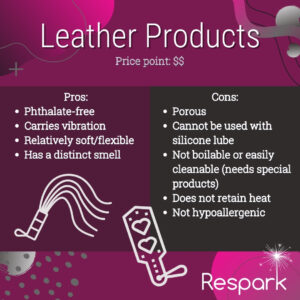
While leather is not typically used for traditional intimacy devices, it is a common material in fetish gear, impact play implements, and erotic apparel. For those wanting a cruelty-free option, there are vegan leather products made from polyurethane (a.k.a. PU, faux leather). Leather products are notoriously porous, even requiring to be rubbed down with leather oils to maintain flexibility. Because of this, leather and leather-like products can be difficult to clean and maintain. However, the scent of leather is considered highly erotic by some, and its use is highly fetishized.
Pros:
- Phthalate-free
- Carries vibration
- Relatively soft/flexible
- Has a distinct smell
Cons:
- Porous
- Cannot be used with silicone lube
- Not boilable or easily cleanable (needs special products)
- Does not retain heat
- Is not hypoallergenic
Price point:
$$
Naturals (Wood, Stone, Crystals)
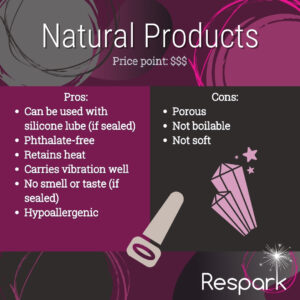
The last group of common intimacy devices are those made from natural materials like wood, stone, and crystals. These products are favored for their natural composition, and many are believed to carry inherent spiritual, emotional, and physical benefits. Being natural, they also do not contain any toxic chemicals and are typically hypoallergenic. However, natural products that have not been covered in a sealant tend to be porous, which makes them more difficult to clean and at risk to grow bacteria.
Pros:
- Can be used with silicone lube (if sealed)
- Phthalate-free
- Retains heat
- Carries vibration well
- No smell or taste (if sealed)
- Hypoallergenic
Cons:
- Porous
- Not boilable
- Not soft
Price Point:
$$$
*Phthalates are a family of chemical softeners that have been identified by the FDA as carcinogens and cause birth defects, and hamper sperm production. Intimacy device manufacturers are not regulated by the FDA, so it is up to consumers to research the products in their toys.
Resources:
Phthalates: The Toxic Chemicals that might be in your sex toy
Dangerous Sex Toys
What is VixSkin Silicone?
https://www.kinkly.com/definition/1343/vixskin-silicone
Ultimate Guide to the Best and Worst Sex Toy Materials
Is Your Dildo Safe?
https://www.mindbodygreen.com/0-26096/4-questions-you-need-to-ask-before-buying-a-sex-toy.html
A Guide to CyberSkin, UR3, and Other Ultra Realistic Sex Toy Materials
https://condomania.com/a/blog/a-guide-to-cyberskin-ur3-and-other-ultra-realistic-sex-toy-materials